
You’re in a ranked match. Your team is down 10-12. The enemy has been running the same aggressive setup all game, and your current agent composition has zero answer for it. Then your teammate installs the new agent — the one everyone’s been talking about, the one that just dropped — and proceeds to single-handedly dismantle everything the enemy team built their entire strategy around.
The chat erupts. The momentum shifts. You win the half.
That’s what a well-designed new Valorant agent feels like when someone actually knows how to use them. And that’s exactly the problem — every time Riot Games drops a new agent, there’s a two-week window where the players who did their homework absolutely feast on the ranked ladder while everyone else fumbles through ability menus trying to figure out what just happened to them.
This guide exists to put you firmly in the first group.
Valorant’s latest agent addition in 2026 has sent the community into full theory-crafting overdrive — and for excellent reason. The kit is genuinely creative, the strategic implications are deep, and the ceiling for skilled play is high enough that mastering this agent early is a legitimate fast track up the ranked ladder before the counter-strategies get figured out.
Whether you’re a seasoned Radiant grinding optimal lineups or a Silver player who just wants to stop being confused about what they’re being killed by, this is your complete, expert-level guide to Valorant’s newest agent.
Let’s break it all down.
Who Is Valorant’s Newest Agent? — Lore & Background
Meet Cypher… Wait, Meet Vesper
Riot Games’ 2026 agent roster addition comes in the form of Vesper — a Controller/Initiator hybrid character whose lore positions her as a former quantum physics researcher turned VALORANT operative who discovered that the anomalous energy signatures causing the Protocol’s greatest threats could be weaponized rather than simply contained.
Vesper’s backstory is woven directly into her kit in a way that Riot’s narrative team has been refining beautifully in recent agent releases. She manipulates resonance fields — invisible energy zones that interact with both terrain and enemy positioning in ways that reward players who understand space control at a fundamental level.
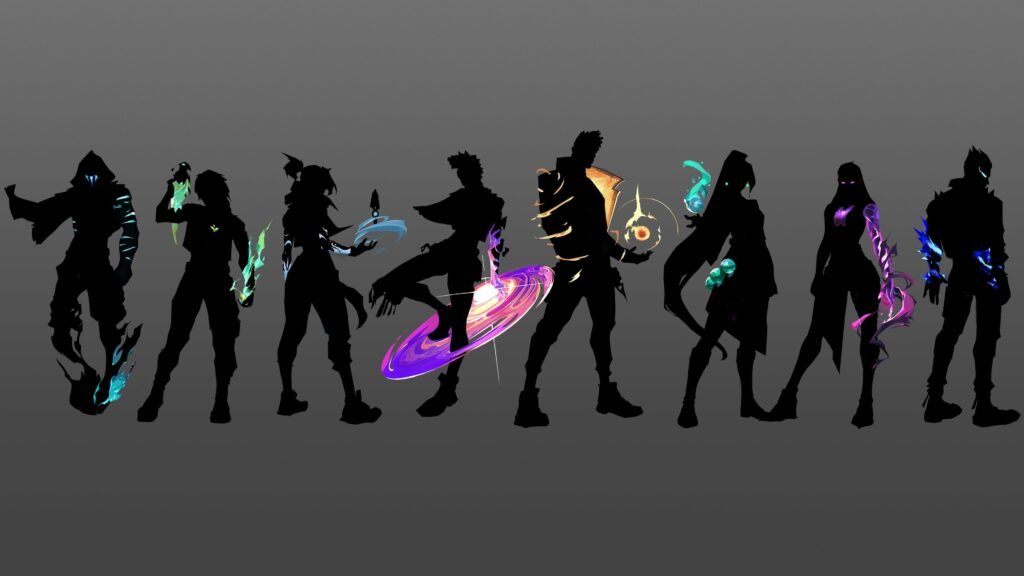
Her visual design is striking — a composed, precise figure in a modified containment suit with subtle energy patterns visible beneath the surface of her gloves and forearms. The color palette of deep purples and cold blues communicates exactly what kind of agent she is before you’ve read a single ability description.
In the lore: Vesper has a complicated relationship with the Protocol — she joined reluctantly, views most operatives as dangerously imprecise, and has a particularly thorny dynamic with Cypher that the community has already started dissecting enthusiastically.
The voice lines are sharp, the character writing is excellent, and Vesper already feels like she belongs in the roster in a way that not every new agent immediately achieves.
Vesper’s Complete Ability Kit — Detailed Breakdown
Basic Ability 1 — RESONANCE PULSE (C)
Cost: 200 credits | Charges: 2
Vesper fires a contained energy burst that travels in a straight line and detonates on contact with a surface, creating a temporary resonance field — a circular zone roughly the size of Sage’s Slow Orb — that persists for 4 seconds.
Enemies inside the resonance field have their ability audio cues amplified and broadcast to Vesper’s team. Essentially, if someone uses an ability inside your Resonance Pulse, your entire team hears a directional indicator of that activation.
This sounds situational until you think about it for thirty seconds — and then you realize how completely it dismantles certain setups. Jett dashing inside a Resonance Field broadcasts her dash sound to your whole team. Neon sliding through one is immediately communicated. Raze satcheling out of a corner inside the field? Your team knows before she clears the angle.
Strategic depth: High. The information gathering is subtle but consistent, and two charges per round means you can cover multiple choke points simultaneously.
Basic Ability 2 — PHASE ANCHOR (Q)
Cost: 300 credits | Charges: 1
Vesper places an anchor point on any surface. While the anchor is active, Vesper’s movement speed is increased by 15%, and she takes 20% reduced damage from the direction she’s facing. The anchor persists until destroyed by enemy fire (it has a health pool of 50HP) or until Vesper manually recalls it.
When recalled — either manually or by Vesper’s death — the Phase Anchor releases a brief but significant blind flash to all enemies within a short radius of the anchor’s position.
This ability has layered utility that takes time to fully appreciate. The passive combat bonuses are genuine and impactful, particularly on defensive rounds. But the delayed flash on recall is where skilled Vesper players earn their advantages — placing the anchor in high-traffic areas, letting enemies push past it, and then recalling at the exact moment teammates are prepared to trade creates explosive coordinated plays.
Signature Ability — INTERFERENCE VEIL (E)
Cost: Free | Recharge: 40 seconds after use
Vesper creates a wall of disrupted energy — visually resembling a translucent curtain of static — that is passable by all players but disrupts ability activation for any enemy that walks through it.
Enemies who pass through the Interference Veil have a 1.5-second window during which they cannot activate any abilities. The veil itself is visible to both teams, persists for 8 seconds, and can be destroyed by sustained fire (80HP).
Why this ability reshapes the meta: The 1.5-second ability lockout window is shorter than it sounds in description and longer than it feels when you’re trying to Jett dash out of a caught-out position or Reyna dismiss away from a losing fight. It forces enemies to either wait for the window to pass or commit to a gunfight without their safety net abilities — and both options are advantageous for Vesper’s team.
Lineups for the Interference Veil placement on different maps are already being theorized extensively in the community. Expect this ability to completely reshape certain choke point dynamics on Ascent, Bind, and Haven specifically.
Ultimate Ability — QUANTUM COLLAPSE (X)
Cost: 8 Ultimate Points
Vesper activates her most powerful ability — a massive expanding resonance field that gradually contracts over 6 seconds, pulling loose objects and disrupting enemy movement (slowing all enemies within the field by 30%) while amplifying all sound within the zone to her team by 200%.
At the moment of full contraction, the field releases a concussive burst that nears all enemies within its range for 1.5 seconds.
The strategic ceiling on Quantum Collapse is enormous. It’s a post-plant ability that punishes lurkers. It’s a retake tool that neutralizes aggressive defenders hiding in unexpected positions. It’s an entry tool that slow-pushes, enemies out of prepared angles. Its versatility means that optimal use is highly situational and highly rewarding for teams that call it correctly.
The visual and audio effects on the ultimate are genuinely spectacular — one of Riot’s most impressive ability presentations in recent agent releases.
Understanding Vesper’s Role — Controller or Initiator?
Vesper is officially classified as a Controller, but her kit has such significant Initiator elements that she’s already being debated as the game’s most effective hybrid role agent since Fade.
In practical terms:
- As a Controller: Interference Veil controls space and denies entry or exit routes in ways that complement or replace traditional smoke usage in certain compositions
- As an Initiator: Resonance Pulse gathers information continuously, Phase Anchor creates flash opportunities, and Quantum Collapse initiates site takes or retakes with stunning effectiveness
The honest assessment: Vesper plays best in compositions that already have a dedicated smoke Controller. She fills the information-and-disruption role rather than pure space denial, and teams that try to use her as their primary smokes will struggle in the current meta.
Best Agent Combinations With Vesper
Some agents pair with Vesper’s kit in ways that feel almost unfair:
- Vesper + Brimstone: Brim’s smokes cover Vesper’s inability to provide pure vision denial. Vesper’s information abilities make Brim’s precise timing calls even more effective.
- Vesper + Killjoy: KJ’s Lockdown combined with Vesper’s Quantum Collapse creates a layered area-denial and information combination that is genuinely brutal on-site defense.
- Vesper + Fade: Fade’s Haunt, combined with Vesper’s Resonance Pulse, creates continuous information streams that give your team a comprehensive real-time map of enemy positions.
- Vesper + Jett: Jett’s aggressive entry benefits enormously from Phase Anchor’s delayed flash — Jett dashes in, Vesper recalls the anchor behind her for a flash that covers her initial engagement.
Map-Specific Strategies
Vesper on Ascent
A site: Place Interference Veil at A Main choke point during pistol rounds — the ability lockout window neutralizes the aggressive Jett dashes that typically dominate pistol executes at A Main.
B site: Resonance Pulse placements near the Market window gather critical information about whether enemies are preparing a B split without exposing yourself to the angle.
Vesper on Bind
The teleporter’s interaction with Vesper’s kit is extraordinary. Phase Anchor placed inside a teleporter means that enemies using the teleporter trigger the anchor’s passive broadcast, and a recall can flash enemies who’ve just arrived through the teleporter — a timing that is genuinely difficult to prepare for.
Vesper on Haven
Three sites create continuous Phase Anchor and Resonance Pulse decisions about information priority, and Vesper’s kit rewards the teams who think clearly about where information is most valuable each round, rather than defaulting to the same placements every time.
Pro Tips for Vesper Mains
- Resonance Pulse is an economic ability — at 200 credits per charge, buying both charges every round is almost always correct. The information it provides routinely wins more rounds than spending those credits on a slightly better weapon.
- Phase Anchor recall timing is everything — the flash on recall hits teammates too if they’re within radius. Communicate with your team before recalling in tight spaces.
- Interference Veil is not a smoke — the most common Vesper mistake at lower ranks is treating the veil as vision denial. It doesn’t block vision. It blocks abilities. Use it specifically to neutralize ability-dependent pushes, not as a generic choke-point block.
- Quantum Collapse on defense is more consistently impactful than offense — the contraction timing on post-plant scenarios is extremely difficult for attackers to manage, and the nearsight at full contraction regularly wins 1v1 clutch situations.
- Place Phase Anchor at head height on walls rather than on the floor — enemies scanning for and shooting the anchor frequently miss it at non-standard heights, keeping your combat bonuses active longer.
Beginner Tips for New Vesper Players
- Start with Resonance Pulse before anything else — it’s the simplest ability to use correctly, and it immediately makes you a more valuable teammate through consistent information sharing
- Don’t anchor-flash your own teammates — communicate in voice or use the ping system before recalling Phase Anchor in any situation where teammates might be near the anchor’s position
- Watch professional Vesper gameplay on YouTube before your first ranked game — even 20 minutes of observing high-level Interference Veil placement will prevent the most common beginner mistakes
- Play Unrated first — Vesper’s kit has enough interaction complexity that practicing in a consequence-free environment will make your first-ranked sessions dramatically more confident
- Learn one Interference Veil lineup per map before your first session on each map — having one reliable, practiced placement beats improvising poorly every round
Vesper vs. Similar Agents — How Does She Compare?
Vesper vs. Cypher: Both are information specialists, but their methods are completely different. Cypher’s information comes from cameras and traps — passive, persistent, positional. Vesper’s information comes from area-denial zones and audio amplification — active, temporary, behavioral. Cypher tells you where enemies are. Vesper tells you what enemies are doing.
Vesper vs. Fade: Fade is the current benchmark for Initiator information gathering. Vesper provides less raw information but more ability disruption. In meta terms, Vesper and Fade serve different strategic purposes — Fade enables aggressive entries, Vesper neutralizes aggressive counters.
Vesper vs. Sage: The Interference Veil/Sage Slow Orb comparison is inevitable. Veil doesn’t slow — it disrupts. Against ability-heavy compositions, Vesper’s disruption is more impactful. Against gun-focused compositions, Sage’s slow creates more consistent value. The composition context determines which is more valuable.
FAQs — Valorant Vesper Agent Guide
Q1: Is Vesper good for beginners in Valorant? Vesper has a higher learning curve than entry-level agents like Reyna or Sage due to the timing and placement complexity of her kit. She’s rewarding once understood, but new players should develop basic game sense before committing to mastering her.
Q2: What rank is Vesper most effective at? Vesper scales with game sense and communication quality — she becomes dramatically more effective in Gold and above, where teammates can act on the information her kit provides. In Iron-Bronze, simpler agents with more direct impact are generally more rank-up-efficient.
Q3: Can Vesper replace a smoke Controller in a team composition? Not reliably. Interference Veil disrupts abilities but doesn’t provide vision denial. Teams attempting to use Vesper as their sole Controller will struggle on maps with multiple entry points that require simultaneous smoke coverage.
Q4: What is Vesper’s strongest ability in the current meta? Interference Veil has generated the most meta discussion due to its ability-lockout mechanic. However, Phase Anchor’s recall flash is arguably creating more direct round-winning moments in organized play — the skill floor is higher, but the ceiling is exceptional.
Q5: Is Vesper viable in professional Valorant play? Early competitive play has shown Vesper appearing in specific compositions on certain maps rather than as a universal pick. She’s strongest in anti-dive and information-gathering compositions and weakest when facing pure gun-focused teams that minimize ability dependency.
Conclusion — Master Vesper Before Everyone Else Does
Here’s the competitive reality of every new Valorant agent release: there is a window — usually three to four weeks — where deep knowledge of the new agent is a genuine ranked advantage. The players who invested the time to understand Vesper’s kit before that window closed will climb. The players who waited for the meta to be figured out by someone else will play against those climbers.
Vesper is not the easiest agent Riot has ever designed. Her abilities demand game sense, communication, and precise timing to reach their full potential. But the agents with the highest skill ceilings are almost always the agents that reward mastery most generously — and Vesper’s information-disruption hybrid kit has one of the highest ceilings in the current roster.
Learn the Resonance Pulse timings. Master the Phase Anchor recall flash. Understand exactly when Interference Veil creates advantages and when it wastes credits. And when you drop your first Quantum Collapse in a perfectly timed post-plant scenario and watch the chat react — you’ll understand exactly why this guide was worth reading.
Now lock her in. The ranked ladder is waiting.
Want more Valorant agent guides, tier lists, map strategies, and competitive meta breakdowns? Tap2Playy.com covers everything you need to climb. Bookmark it — every ranked session is better with the right preparation.




Just checked out 87aapp, and I’m impressed with the variety of options. Looks like a solid place to try your luck! Head over to: 87aapp