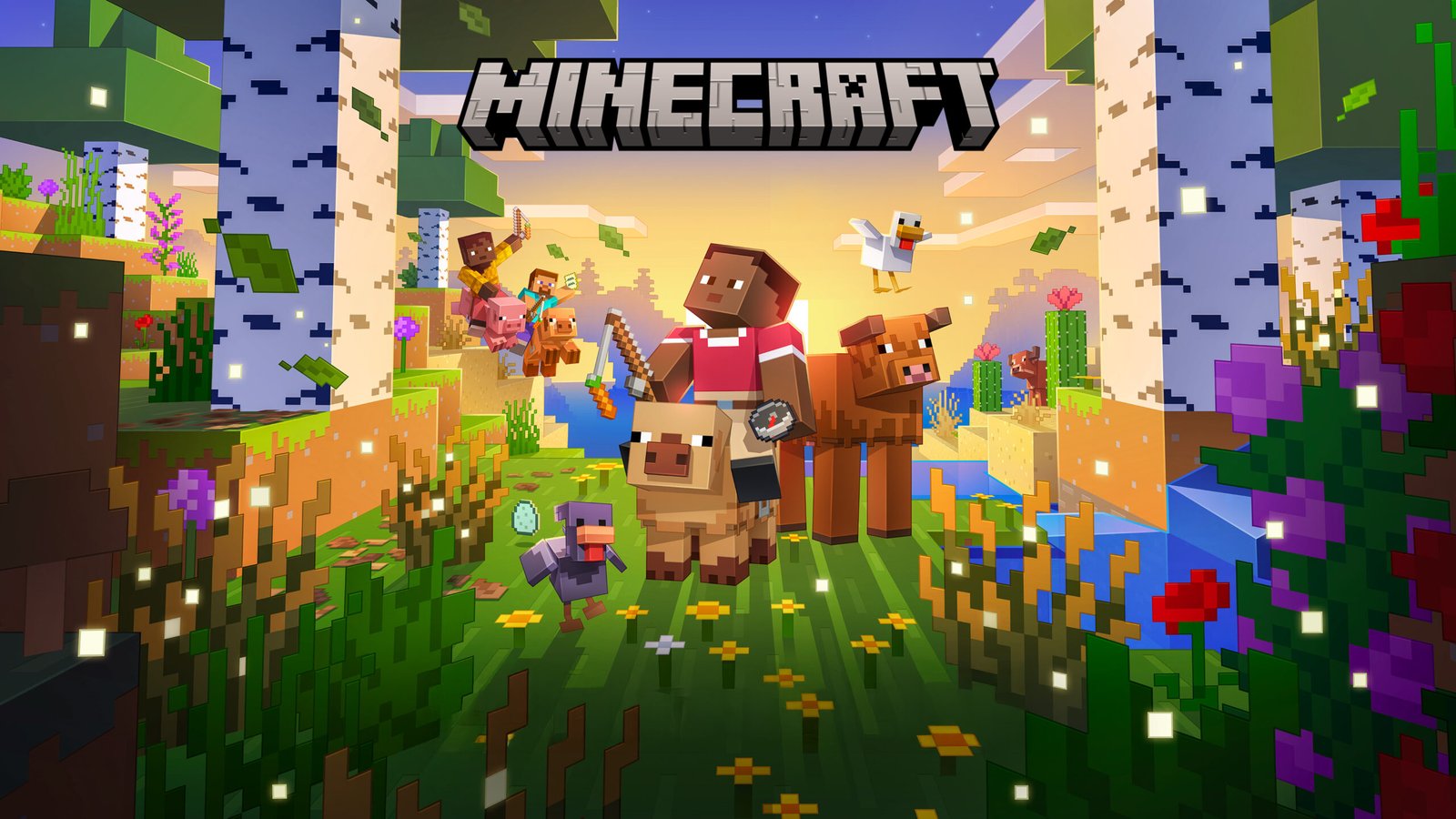
You load into your world. Something immediately feels different. The horizon looks wrong — in the best possible way. There’s a biome in the distance you’ve never seen before, glowing in colors your world has never produced. A sound reaches you from underground that definitely wasn’t in the game last week. And in your peripheral vision, something moves through the tree line that stops you dead in your tracks.
Mojang did it again.
There is no gaming experience quite like the specific joy of a major Minecraft update dropping. It doesn’t matter if you’ve been playing since Alpha, if you came in during the Caves and Cliffs era, or if you downloaded it last month — a significant Minecraft update transforms a familiar world into something that feels genuinely unknown again. The map you know by heart suddenly has secrets. The caves you’ve explored a hundred times have new depths. The surface holds surprises that your existing mental model of the game couldn’t have predicted.
The 2026 Minecraft update — officially titled “The Wilds Reborn” — is being called by many in the community one of the most ambitious content drops since the landmark 1.18 Caves and Cliffs Part II update. New biomes that fundamentally change how surface exploration feels. New mobs that introduce entirely novel gameplay dynamics. New mechanics that veteran players are already calling game-changing in ways both subtle and profound.
Whether you’re a veteran builder, a hardcore survival player, a Redstone engineer, or someone who just wants to get lost in a beautiful world for a few hours, this complete guide breaks down everything the 2026 update delivers and exactly how to get the most out of every new addition.
Let’s explore.
What Is the Minecraft 2026 “Wilds Reborn” Update?
Before diving into specifics, some context about what this update represents in Minecraft’s ongoing development story.
Mojang has been systematically addressing the parts of Minecraft’s world that felt thinner or less developed compared to the incredible depth added to caves, mountains, and oceans in previous major updates. The Wilds Reborn update targets surface biome diversity and ecosystem depth — specifically the biomes that players traverse constantly but that have felt relatively static and feature-sparse compared to the richly developed underground systems.
The update also introduces the first significant revision to Minecraft’s mob AI systems since the Bedrock/Java parity project — meaning creatures in 2026 Minecraft think, react, and behave in more convincingly alive ways than they ever have before. The difference is subtle in documentation and immediately obvious in gameplay.
Finally, a new progression system thread has been woven into the update’s content — not mandatory, not game-altering, but present for players who want structured goals alongside the sandbox freedom Minecraft has always offered.
This is a big update. Let’s break it all down piece by piece.
New Biomes — The World Just Got Bigger
The Thornwood Forest
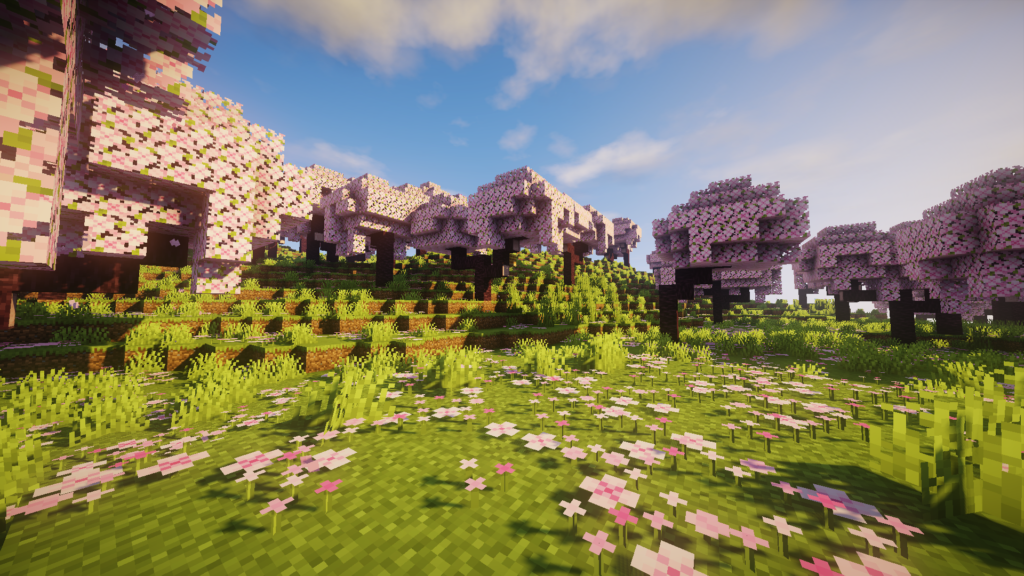
The most visually striking addition in the entire update. The Thornwood Forest is a dense, dramatic biome characterized by ancient trees with dark, textured bark, an undergrowth layer of luminescent moss and twisted root structures, and a canopy so thick that midday light barely penetrates to the forest floor.
The atmospheric effect of the Thornwood is genuinely unlike anything previously in vanilla Minecraft. The combination of low light levels, dense foliage, and new ambient particle effects creates an environment that feels ancient and slightly ominous even without any immediately threatening mobs.
What makes it strategically significant:
- Thornwood trees produce a new wood type — Ashwood — with a dark charcoal aesthetic that builders have already started incorporating into builds shared across social media platforms
- The undergrowth layer generates Glowcap Mushrooms, a new food source with unique status effect properties
- Underground cave systems beneath Thornwood biomes have dramatically increased ancient debris spawn rates — making them the new preferred location for Netherite hunters
- Thornwood Hollow structures generate occasionally throughout the biome — partially ruined ancient structures with unique loot tables that include the update’s new armor trim variants
The Thornwood Forest has already become the most screenshot-shared biome in the update’s short existence. The visual identity is simply that striking.
The Salt Flats
A complete departure from anything Minecraft’s surface has offered before. The Salt Flats biome generates as vast, flat expanses of pale white and gray terrain — cracked salt ground stretching to the horizon, interrupted only by crystalline salt formations that rise from the surface in irregular clusters and the occasional dried riverbed cutting through the terrain.
The aesthetic is stark, almost haunting, and deeply beautiful in a way that contrasts powerfully with Minecraft’s typically lush surface biomes.
Gameplay significance:
- Salt Crystal blocks are the biome’s signature resource — harvestable in multiple variants and usable in both crafting recipes and as a building material with unique visual properties
- The flat terrain makes the Salt Flats the best biome in the game for large-scale surface builds — the natural flatness eliminates hours of terrain preparation for ambitious construction projects
- Salt Flat nights are darker than most surface biomes — the absence of tree cover means hostile mob spawns are more aggressive, creating genuine survival tension after sundown
- A new Mirage structure generates within Salt Flats — visually appearing as a distant oasis that, when approached, reveals itself as a naturally generated structure containing unique loot and one of the update’s new mob encounters
The Ashen Peaks
The third major biome addition occupies high-altitude mountain zones and represents Minecraft’s first truly volcanic surface biome. Ashen Peaks are dominated by dark volcanic rock, fields of ash that shift in player footsteps, scattered ember particles that drift upward from underground heat sources, and occasional fumarole vents that release periodic steam bursts.
The visual drama of an Ashen Peaks biome visible from a distance — dark spires rising above the snowline, ember glow visible at dusk — is the kind of discovery moment Minecraft’s world generation excels at producing.
What players need to know:
- Volcanic Stone is the biome’s primary building block — a dark, textured material that has already become one of the most requested additions to Minecraft’s building palette
- Fumarole vents deal damage if stood upon, but can be redirected with Redstone mechanisms to create traps, heating systems, or purely decorative installations
- The biome generates Ember Crystals — a new ore-adjacent resource used in the update’s new smithing recipes
- Underground cave systems beneath Ashen Peaks connect to a new Magma Chamber structure — a dangerous, reward-rich environment that represents some of the update’s most challenging natural exploration content
New Mobs — The World Feels Alive
The Thornstalker
The Thornwood Forest’s apex predator — and Minecraft’s most behaviorally sophisticated hostile mob to date.
The Thornstalker is a large, arthropod-like creature with a camouflage system tied directly to the biome’s visual palette. When stationary, it blends into Thornwood undergrowth with remarkable effectiveness. When moving, its bioluminescent markings pulse with a subtle green glow — visible if you’re looking carefully, invisible if you’re not.
Its AI represents the new mob behavior system at its most impressive. The Thornwalker doesn’t simply path toward players — it stalks. It uses Thornwood’s dense foliage as cover, approaches from unexpected angles, and disengages to reposition rather than committing to an unfavorable attack angle. Fighting one alone at night in a Thornwood Forest is a genuinely tense experience.
Drops: Chitin plates (new crafting material) and occasionally a Bioluminescent Sac — a rare drop used in the new lantern variants added this update.
The Salt Wraith
A passive mob that becomes one of the update’s most interesting behavioral encounters. Salt Wraiths appear as translucent, vaguely humanoid forms drifting slowly across Salt Flat terrain during daylight hours. They’re peaceful, ethereal, and beautiful — until provoked or until a player approaches within 4 blocks without offering a Salt Crystal.
When hostile, Salt Wraiths reveal a secondary form — the translucent exterior cracks to reveal a bright internal core — and they gain the ability to phase through walls briefly, making them deeply unsettling to fight in the Mirage structure encounters where they appear in groups.
Peaceful interaction: Players who regularly offer Salt Crystals to Wraiths without provoking them can eventually achieve a passive relationship that causes Wraiths to guide players toward buried structure locations. One of the update’s most charming optional interactions.
The Emberback Tortoise
A passive mob native to Ashen Peaks that has already become a community favorite for entirely predictable reasons — it’s extraordinarily charming, its shell glows with ember patterns that shift depending on ambient temperature, and it drops Ember Crystals when its shell is gently tapped with an appropriate tool.
But the Emberback Tortoise has a secondary function that no previous Minecraft passive mob has offered: it can be tamed with Volcanic Stone and used as a mobile crafting station. A tamed Emberback carries a 3×3 crafting grid on its back that persists between sessions. The community’s response to discovering this feature was, predictably, explosive.
New Mechanics & Features
Revised Mob AI System
This is the update’s most far-reaching change and the one least visible in promotional screenshots. Mojang has significantly revised the pathfinding and behavioral decision-making for virtually every existing hostile mob, with effects ranging from subtle to dramatic.
Creepers now approach from less predictable angles. Skeletons actively seek elevated positions before engaging. Zombies in groups exhibit rudimentary coordinated behavior — one drawing attention while others approach from flanks. None of this is scripted. It’s emergent from improved behavioral weights in the AI system.
The practical effect is that Minecraft survival feels noticeably more demanding in 2026 — in a way that veteran players have described as the game finally respecting how much experience they’ve accumulated.
The Cartography Expansion
Maps in Minecraft have received their most significant upgrade since the introduction of exploration maps. The new cartography system allows players to annotate maps with custom markers, share annotations between maps when combined at a cartography table, and generate region maps that composite multiple individual maps into a single large-scale overview.
For multiplayer servers and large solo worlds, this is transformative. The ability to collaboratively map a shared world and pass information through annotated maps creates genuinely new social and navigational dynamics.
Archaeological Sites — Expanded
Building on the archaeology system introduced in previous updates, The Wilds Reborn significantly expands both the frequency and depth of archaeological encounters. New dig sites in all three new biomes contain biome-specific artifact categories, and a new Archaeological Journal item can be filled with discovered artifacts to unlock lore entries about Minecraft’s world history — the deepest narrative layer the game has ever offered.
Pro Tips for the 2026 Update
- Prioritize finding a Thornwood Forest early — the Ashwood aesthetic is stunning, and the increased Netherite spawn rates beneath it will accelerate your mid-game progression significantly
- Bring Salt Crystals before entering Salt Flats territory — the Salt Wraith passive interaction is one of the update’s most rewarding hidden features, and it requires consistent Salt Crystal offerings over multiple encounters to unlock
- Emberback Tortoise taming requires Volcanic Stone specifically — not regular stone, not smooth stone. Keep several pieces in your hotbar when exploring Ashen Peaks
- The revised mob AI means torches alone no longer reliably prevent hostile spawns in dense biomes — the Thornwood Forest in particular requires a lighting strategy that considers the undergrowth layer, not just the ground surface
- Mirrage structures in Salt Flats reset their loot tables every in-game week — mark their locations on your new annotated maps and return regularly for consistent reward cycles
Beginner Tips for New Players
- Don’t spawn-hunt in Thornwood immediately — spend your first Thornwood visit in daylight learning the Thornwalker’s movement patterns before any night encounters
- The Salt Flats look safe because they’re flat — the darkness level and aggressive mob spawning at night make them genuinely dangerous for under-equipped players; visit with full armor
- Fumarole vents in Ashen Peaks are marked by rising steam particles — they’re visible from a safe distance, so learning to identify them visually before stumbling onto them prevents a lot of unnecessary damage
- Start the archaeological journal early — the lore entries unlock progressively, and earlier artifacts establish context that makes later discoveries more meaningful
- Build your base near a biome boundary — having multiple new biomes accessible from a central location lets you experience the update’s content without constant long-distance travel
Minecraft 2026 vs. The Competition — Does It Still Lead?
The sandbox survival genre has grown significantly since Minecraft defined it, and the comparison questions are worth addressing.
Minecraft vs. Terraria: Terraria’s 1.4 update remains the benchmark for content density in 2D sandbox games. Minecraft’s Wilds Reborn matches Terraria’s content ambition in 3D — the biome depth, mob sophistication, and mechanical expansion are comparable in scope if different in style. Both games are better for existing alongside each other.
Minecraft vs. Valheim: Valheim’s Norse mythology world-building creates a more directed, narrative-driven sandbox experience. Minecraft’s pure player-driven freedom remains incomparable — but Valheim’s combat and exploration atmosphere has influenced what survival game players now expect, and Mojang’s AI improvements show awareness of that raised standard.
The truth in 2026: Minecraft doesn’t need to defeat its competition. It needs to keep being the most accessible, most versatile, most creative sandbox ever made — and The Wilds Reborn update demonstrates that Mojang understands this completely.
FAQs — Minecraft 2026 Update
Q1: What is the best new biome in the Minecraft 2026 update? The Thornwood Forest generates the most community excitement due to its visual distinctiveness and strategic value — increased Netherite spawns and unique Ashwood building material make it both beautiful and mechanically rewarding.
Q2: Is the Minecraft 2026 update available on all platforms? The Wilds Reborn update releases simultaneously on Java Edition and Bedrock Edition, covering PC, console, and mobile platforms. Specific feature parity between editions follows Mojang’s standard parity timeline.
Q3: How does the revised mob AI affect existing Minecraft worlds? The AI improvements apply to newly spawned mobs in existing worlds — you’ll notice behavioral changes in current saves without needing to generate new terrain, though the new biomes only appear in newly generated chunks.
Q4: Can you tame multiple Emberback Tortoises? Yes — there is no limit to the number of Emberback Tortoises a player can tame. Each carries an independent crafting grid, which has already inspired community designs for mobile crafting station systems and automated tortoise-based Redstone contraptions.
Q5: Is the Archaeological Journal required for progression? No — the journal is entirely optional content for players interested in Minecraft’s expanded lore. It has no mandatory progression gates and can be completely ignored without affecting any other gameplay system.
Conclusion — The World Is Bigger Than You Remember
Every time you think you’ve seen everything Minecraft has to offer, Mojang rebuilds the horizon.
The Wilds Reborn update isn’t just new content dropped into a familiar game — it’s a genuine expansion of what Minecraft’s world feels like to inhabit. The Thornwood Forest creates mystery where the surface feels mapped. The Salt Flats introduce a visual language that the game has never spoken before. The Ashen Peaks make mountains feel dangerous and dramatic in entirely new ways. And the revised mob AI makes the world feel like it notices you’re there.
Whether you’re returning after years away, playing daily and hungry for new challenges, or loading Minecraft for the very first time, there has genuinely never been a better moment to step into a new world and start exploring.
The Thornwalker is out there in the trees. The Salt Wraith is drifting across the flats. The Emberback Tortoise is waiting to become your most impractical and beloved companion.
Generate a new world. Pick a direction. And go find out what 2026’s Minecraft has hidden just beyond the render distance.
Stay updated on every Minecraft update, mod review, build guide, and community discovery at Tap2Playy.com — your home for everything Minecraft and beyond. Bookmark it. Your next favorite build idea is one article away.




Heard good things about *b29 bet*. Gonna give it a whirl myself. I found the link here: b29 bet
Is hindubetgame any good? I’m always looking for new options and this one popped up. Looking for honest opinions! Give it a look yourself at hindubetgame